AI is changing work. Your workforce should be ready for what comes next.
See which tasks are likely to be automated, augmented or newly created – and what that means for roles, skills and capacity across your organization.
Understand AI impactSee which tasks are likely to be automated, augmented or newly created – and what that means for roles, skills and capacity across your organization.
Understand AI impactUnderstand which roles, skills and capacities your business will need before shortages, demographics or growth narrow your options.
Think workforce forwardSeparate metrics that merely report from the relationships that explain what is happening, why it is happening and where to act.
Turn data into decisionsAlign roles, operating model, processes and collaboration so HR becomes more effective where the business actually feels it.
Transform HRSee the patterns, cost drivers and leadership mechanisms behind the rate – and manage the levers that create real impact.
Reduce absenteeism
Connect capacity, skills, demographics and critical roles to business scenarios. We turn separate HR data into a forward-looking view of where you may run short, where you have room and which decisions matter now.
We look below the tool level and model the impact on tasks. That shows which work may be automated, augmented or newly created – and what this means for roles, skills and workforce capacity.
You do not need another layer of reporting. You need the metrics and relationships that explain what is happening, reveal the underlying mechanisms and improve the decisions that follow.
Translate the target state into operating model, roles, processes and governance. The objective is not a new chart. It is an HR organization that works better with the business.
Not every resignation has the same impact. We identify critical populations, patterns, turnover costs and drivers – so retention activity becomes targeted rather than broad and generic.
Absence rates are indicators, not explanations. We make patterns, costs, leadership mechanisms and underlying drivers visible – and translate them into a focused management roadmap.
Decisions, leadership, communication and routines need to reinforce each other. We help translate the intended change into what people actually do differently.
You do not need to navigate our internal service boundaries. What matters is what needs to change in your business. That is why analytics, workforce and transformation deliberately connect.
Create transparency on the roles, skills and capacities your organization will need in the future.
Translate target states into roles, structures, leadership and operating reality.
Improve availability, retention and talent outcomes where the drivers are clear and the business impact matters.
We do not start with a format and look for a problem to fit it. We start with the decision your business needs to make, understand the mechanism behind the issue and build the route from insight to implementation.
What needs to be different? Which management decision are you trying to make? That becomes the starting point – not our preferred methodology.
Symptoms are visible. Causes often are not. We use data, KPIs, interviews and operating context to understand what is actually driving the outcome.
Analysis only creates value when it changes a decision. We turn findings into a prioritized roadmap, clear ownership and realistic next steps.
A recommendation is not the finish line. Leadership, HR and the operating business need to make the change real in routines, decisions and behavior.
A harbinger is an early signal. So we look beyond what organizations are dealing with today and focus on what is moving onto tomorrow's management agenda.
As AI scales into everyday work, the question is no longer just which tasks can be automated. The bigger shift is how roles, capacity, decision rights and collaboration need to be redesigned.
Demographics, skills scarcity and AI are turning long-term workforce scenarios into a management question. The earlier you see the gaps, the more options you retain.
You do not need more dashboards. You need answers to three questions: What is happening? Why is it happening? What decision follows?
New processes alone change little. Roles, governance, capabilities and business interfaces determine whether HR becomes more effective in operating reality.
When cost rises and capacity becomes scarce, absence stops being an isolated HR metric. It becomes an operational, financial and leadership question.
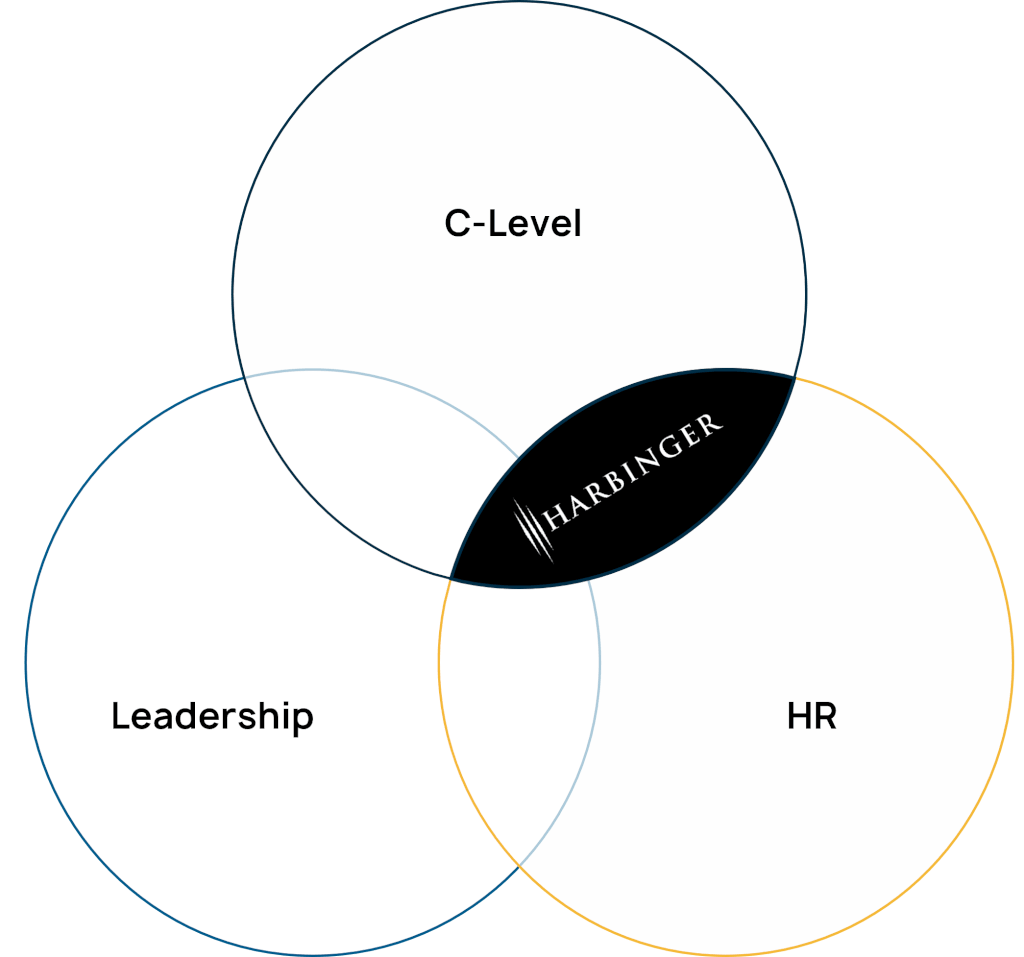
Harbinger works at the intersection of executive management, leadership and HR. We combine analytical depth with pragmatic implementation so that people and workforce questions become better management decisions. Our clients work with us when the issue is important enough to require more than another report, workshop or generic best-practice answer.
You bring the situation. We identify the questions that matter, challenge assumptions and show which next steps make sense. You decide how far we go together.